We are proud that, together with our partners, we will support virtually all municipalities in both provinces in updating and managing their charging plans in the coming years. This initiative contributes to the development of a future-proof, smart, and open ecosystem for public charging infrastructure.
What distinguishes this contract?
- In addition to the 10,000 locations already managed within our system, an additional 10,000 locations will be included for future deployment in a subsequent concession for the “RAL Southwest” region, led by Rotterdam. This will facilitate faster rollout at pre-approved sites.
- During the update process, EVTools and Haskoning will implement further automation and placement algorithms, which will make the planning of charging locations both faster and more cost-effective.
- Data-driven decision-making: Through integrations with platforms such as the LINDA portal of the National Road Traffic Data Portal (NDW) and Ecomovement, consumption data and process KPIs are made available to all stakeholders, allowing for independent filtering and analysis.
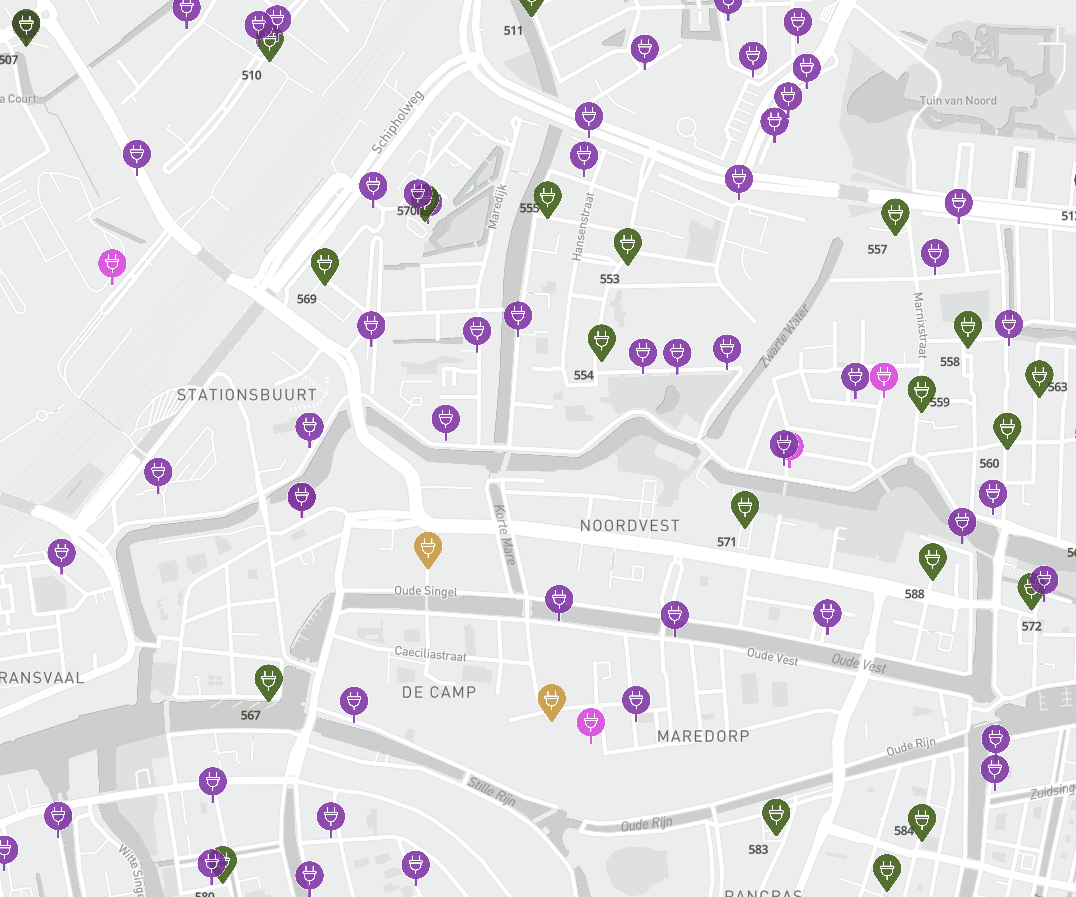
- GIS integration for every municipality: Each participating municipality will receive a direct integration with its own GIS environment, ensuring that charging locations and processes remain consistently current for comprehensive public space management.
- Support for amendment and acquisition processes, as well as a private process for charging points on existing connections, tailored to the new concession requirements concerning extended private connections and lampposts.
- Synchronized data exchange: Locations and statuses can be automatically shared via two-way integrations between municipalities, provinces, concession holders, and operators.
- Open software ecosystem: SWIS (developer of Laadpaalnodig.nl for the NKL) and EVTools are collaborating to establish an open software ecosystem, featuring standardized integrations and bidirectional data exchange. By identifying open standards, we prevent vendor lock-in and ensure that municipalities and operators retain freedom of choice regarding their systems.
- Continuity and scalability: The software is currently utilized by 60 municipalities and 8 operators in the region and can be readily expanded to include additional active operators.
The Benefits
- Faster and more cost-effective planning through automation and algorithms.
- Reduced errors through real-time synchronization across all involved systems.
- A single, up-to-date overview for municipalities, provinces, and operators.
This contract, coupled with existing licenses, provides a nearly comprehensive overview of the dynamic charging infrastructure network in South Holland and Zeeland, thereby establishing a robust foundation for the ongoing energy transition.
What distinguishes this contract?
- In addition to the 20,000 locations already managed within our system, an additional 10,000 locations will be included for future deployment in a subsequent concession for the “RAL Southwest” region, led by Rotterdam. This will facilitate faster rollout at pre-approved sites.
- During the update process, EVTools and Haskoning will implement further automation and placement algorithms, which will make the planning of charging locations both faster and more cost-effective.
- Data-driven decision-making: Through integrations with platforms such as the LINDA portal of the National Road Traffic Data Portal (NDW) and Ecomovement, consumption data and process KPIs are made available to all stakeholders, allowing for independent filtering and analysis.
- GIS integration for every municipality: Each participating municipality will receive a direct integration with its own GIS environment, ensuring that charging locations and processes remain consistently current for comprehensive public space management.
- Support for amendment– and acquisition processes, as well as a private process for charging points on existing connections, tailored to the new concession requirements concerning extended private connections and lampposts.
- Synchronized data exchange: Locations and statuses can be automatically shared via two-way integrations between municipalities, provinces, concession holders, and operators.
- Bidirectional integration: In collaboration with SWIS (developer of Laadpaalnodig.nl), we enable applications and processes to synchronize automatically. This ensures that municipalities, concession holders, and operators consistently have access to the same current information, eliminating the need for duplicate data entry.
- Open standards: In this pilot, we are collaborating with SWIS to establish open API standards. This approach prevents vendor lock-in and ensures that municipalities and operators retain their freedom of choice within an open ecosystem.
- Continuity and scalability: The software is currently utilized by 60 municipalities and 8 operators in the region and can be readily expanded to include additional active operators.
️ The Benefits
- Faster and more cost-effective planning through automation and algorithms.
- Reduced errors through real-time synchronization across all involved systems.
- A single, up-to-date overview for municipalities, provinces, and operators.
This contract, combined with ongoing projects, provides a nearly comprehensive overview of the dynamic charging infrastructure network in South Holland and Zeeland, thereby establishing a robust foundation for the ongoing energy transition.