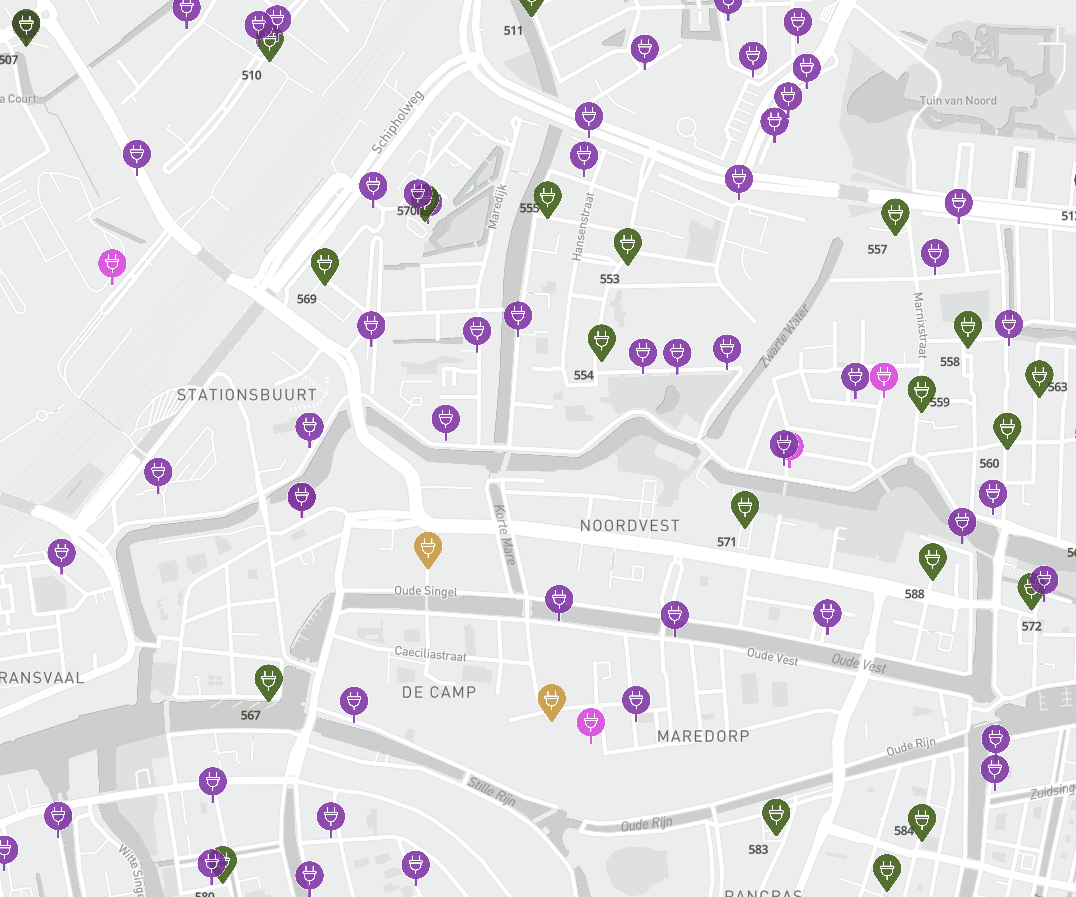
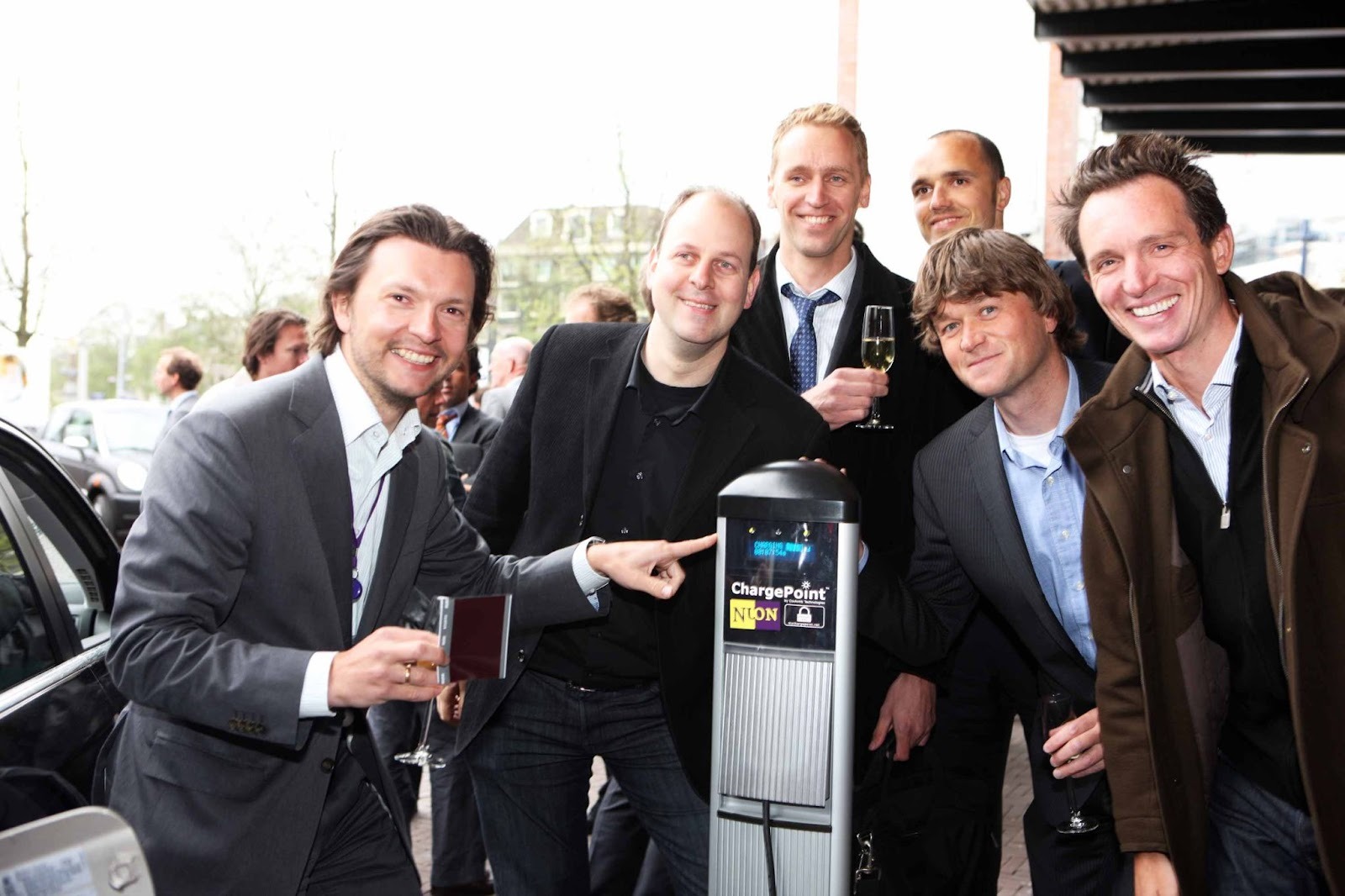
When I launched the first contract for charging points in 2008, it was for a few Th!nk cars from Norway. The municipality of Amsterdam had purchased several of these cars to demonstrate that it was truly possible: driving on electricity! Electric driving was intended to be the solution for local air quality issues, and the municipality wanted to set a good example. These plastic 'bumper cars' needed their own charging point, a regular socket on a pole in the street.
We maintained that 'demand-driven' model for a long time. Because there was nothing yet, anyone who bought an electric vehicle immediately became our customer for a charging point. We had personal contact with all these pioneers and catered to their needs. We even installed charging points for electric scooters, just to expand the network. We ensured that a lack of charging points would never be an impediment to switching to electric.
The 'application-driven' approach played a central role in Amsterdam until recently: anyone who could prove they would be using a vehicle received a charging point. In other municipalities, the question arose for the first time whether the demand for charging points was not predictable. For the municipality of Gouda, we used the first, sometimes very broad, forecasts to get an idea of how many charging points would be needed. It was pioneering work, as no one knew how quickly electric driving would develop.
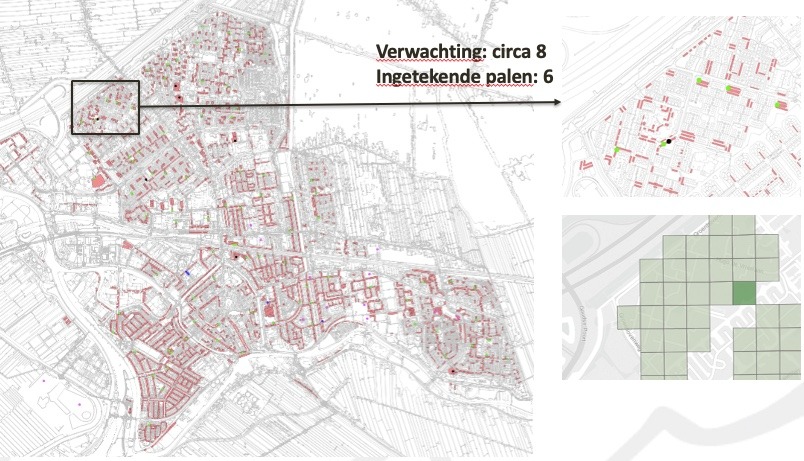
First forecast by EVTools, municipality of Gouda 2016
Now, more than fifteen years later, forecasts are still useful – but no longer as decisive. Many now exist, compiled by knowledge institutions, governments, and market players. The EU operates with targets, the Netherlands with the National Charging Infrastructure Agenda, grid operators have forecasts from the E-laad foundation, universities use simulation models such as SparkCity, and operators have their own estimates. These often differ and are sometimes updated or not, depending on political decisions and policies. This makes forecasts valuable, yet also volatile: they provide direction, but never the complete truth.
From Forecasts to Real-World Data
What I have observed over the years is that ultimately, the existing network serves as the most reliable indicator. Practical reality most accurately reveals the true business case for a specific location. How often is charging occurring, at what times, and how does this evolve over time?
I now observe that contracts between municipalities and operators increasingly include threshold values: for example, agreements that expansion only occurs at a certain occupancy rate. This means that data is not only used for monitoring but also as a joint steering instrument. It requires transparency and access to the same data via interfaces.
Today, an increasing number of sources are available for this purpose. European AFIR regulations have led to the establishment of National Access Points, where charging data is centrally accessible. In the Netherlands, we have the NDW for this, and in Belgium, Transportdata.be. Additionally, commercial data services provide enriched information, along with data directly from operators' CPMS systems. This combination enables not only retrospective analysis but also dynamic future planning.
Spatial and Societal Context
Charging infrastructure is never an isolated system. It directly impacts demographics, mobility, how we calculate forecasts (read more about how we calculate forecasts here), and energy. Therefore, it is crucial to always align forecasts and network data with spatial and strategic plans: where is the population growing, where are new residential areas emerging, how are traffic flows changing, where are zero-emission zones being established, how is charging behavior evolving, and most importantly: where is grid capacity available?
As a consultant, and later with our software company, I have consistently emphasized that truly intelligent decisions are only made when these diverse data sources are combined. This is not merely about 'where a charging point is occupied or vacant today,' but about how to prepare a city or region for the mobility of tomorrow.
Towards a Data-Driven Ecosystem
I believe we have now reached a point where isolated decisions are no longer sufficient. It is about building a data-driven ecosystem where municipalities, operators, and grid managers collaborate based on shared insights. This ecosystem accommodates various rollout strategies, provided the same data is accessible to everyone.
Leveraging this experience, EVTools has developed a platform that consolidates all these data sources. Its purpose is not to make decisions for municipalities or operators, but to equip them with the appropriate tools. This ensures seamless collaboration on the path towards green mobility. In this way, we collectively build charging networks that not only function today but will also remain suitable for the city, the region, and the user a decade from now.